
The Ceremony of the Keys: The Tower of London’s Ancient Nightly Tradition

The Tower of London is one of the most iconic landmarks in the United Kingdom. For nearly a thousand years, this historic fortress has stood on the banks of the River Thames, witnessing royal intrigue, dramatic executions, and some of the most important events in British history.
Most visitors come to see the Crown Jewels, the White Tower, and the famous ravens that guard the fortress. However, one of the Tower’s most fascinating traditions happens every single night after the visitors leave. This ritual is known as the Ceremony of the Keys, the official locking of the Tower of London.
For travelers interested in British traditions and royal history, learning about this ceremony adds an extra layer of meaning to a visit. Many guests discover these stories during Tower of London guided tours, where expert guides explain how centuries-old traditions still shape life inside the fortress today.
Keep reading: Unlock the Secrets of Dawn: The Opening Ceremony Experience with the Best Tower of London Tours
A Fortress Built by William the Conqueror
The history of the Tower of London begins in 1066, when William the Conqueror ordered the construction of a massive stone fortress to secure his control over London after the Norman Conquest.
At the heart of the complex stands the White Tower, completed around 1100. Over time, the fortress expanded with additional walls, towers, gates, and defensive structures.
Throughout its long history, the Tower of London served several roles:
- Royal palace
- Military fortress
- Prison for political enemies
- Royal treasury
- Armoury
- Home of the Crown Jewels
Because the Tower stored valuable royal possessions and weapons, it was essential that it be carefully protected every night.
This need for security eventually led to the creation of the Ceremony of the Keys, a ritual that still takes place today.
Visitors often learn about these early centuries of history during Tower of London guided tours, which help bring the medieval fortress to life.
What Is the Ceremony of the Keys?
The Ceremony of the Keys is the traditional locking of the Tower of London gates each night. It is one of the oldest continuously performed ceremonies in the world.
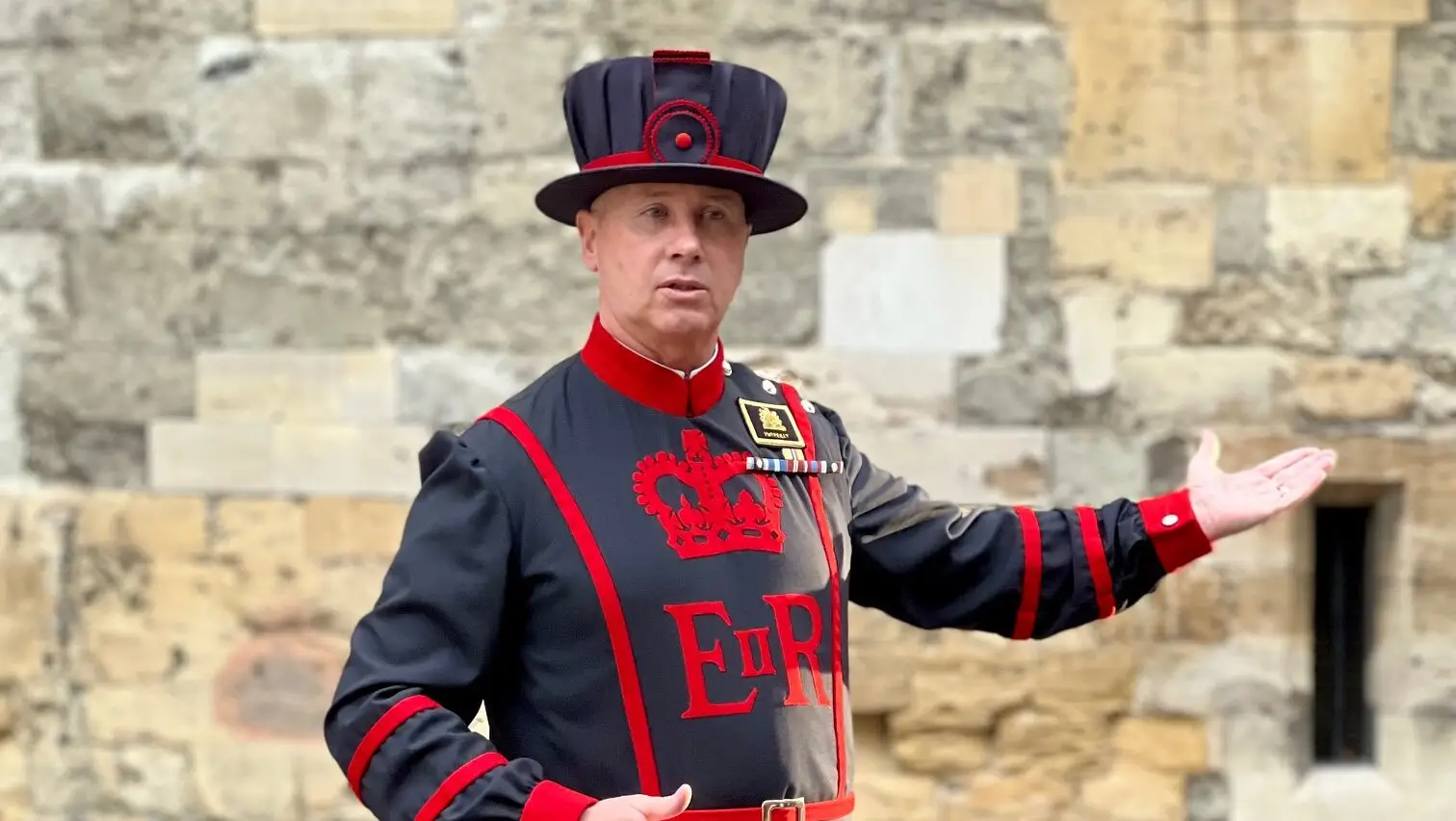
The ritual takes place every night at exactly 9:53 pm and is carried out by the Yeoman Warders, the ceremonial guardians of the Tower who are also known as the Beefeaters.
Although the ceremony lasts only a few minutes, it follows a precise routine that has been performed for centuries with very little change.
The ritual symbolizes the protection of the Tower and the security of the Crown Jewels, which remain one of the most valuable royal collections in the world.
For visitors exploring the fortress earlier in the day, guides often explain the ceremony and its significance during Tower of London guided tours.
How the Ceremony Takes Place
The Ceremony of the Keys follows a strict and historic sequence.
Each night, the Chief Yeoman Warder emerges from the Byward Tower carrying a lantern and the ceremonial keys of the fortress. He is escorted by members of the Tower Guard, who accompany him as he locks the gates.
Once the outer gates are secured, the group returns toward the Tower.
At this point, a sentry challenges them with a traditional call that has been repeated for centuries.
The famous exchange goes like this:
Sentry: “Halt! Who comes there?”
Chief Warder: “The Keys.”
Sentry: “Whose Keys?”
Chief Warder: “King Charles’ Keys.”
Sentry: “Pass then. All is well.”
Once the sentry confirms that the Tower is secure, the ceremony ends with the sounding of the Last Post, a traditional military bugle call.
Hearing about this ritual during Tower of London guided tours helps visitors understand how the Tower continues to preserve traditions that date back hundreds of years.
A Ceremony That Has Survived Wars and Centuries
One of the most remarkable facts about the Ceremony of the Keys is that it has taken place every single night for over 700 years.
Despite wars, political revolutions, and major changes in British society, the ritual has continued almost without interruption.
Even during World War II, when London was heavily bombed during the Blitz, the ceremony still took place.
On one occasion, a nearby explosion briefly disrupted the ritual. The Yeoman Warder simply restarted the ceremony a few minutes later, ensuring that the tradition continued.
Stories like these are often shared during Tower of London guided tours, revealing the deep sense of duty associated with the fortress.
The Yeoman Warders: Guardians of the Tower
The Yeoman Warders are one of the most recognizable symbols of the Tower of London. Their distinctive uniforms and centuries-old traditions make them a key part of the Tower’s identity.
To become a Yeoman Warder, candidates must have served at least 22 years in the British Armed Forces and reached the rank of warrant officer.
Today, the Yeoman Warders perform several important roles:
- Protecting the Crown Jewels
- Guarding the Tower
- Leading tours and sharing history with visitors
- Participating in historic ceremonies
Their stories and humor are often highlights of Tower of London guided tours, giving visitors a unique insight into the life of the fortress.
Why the Ceremony Still Matters Today
Although the Tower of London is now a UNESCO World Heritage Site and one of Britain’s most popular attractions, it remains a place of living tradition.
The Ceremony of the Keys represents:
- The protection of the Crown
- The continuity of British history
- The importance of royal tradition
- The role of the Tower as a symbol of national identity
For many visitors, learning about this ritual helps them see the Tower not just as a historic building, but as a place where history continues to live.
This deeper understanding is often why travelers choose Tower of London guided tours, allowing them to discover the stories behind the fortress walls.
Visiting the Tower of London
Today, millions of visitors travel to the Tower of London every year. The fortress offers an extraordinary journey through nearly a thousand years of British history.
Some of the most popular highlights include:
- The Crown Jewels
- The White Tower
- Tower Green and the site of famous executions
- The medieval defensive walls
- The legendary ravens of the Tower
However, with so many stories hidden within the complex, it can be difficult to fully appreciate the Tower without expert guidance.
This is why many travelers choose Tower of London guided tours, which reveal the dramatic history behind the fortress.
Explore the Tower of London with Urban Saunters
For visitors who want a deeper and more immersive experience, a guided tour can make all the difference.
Urban Saunters offers one of the most memorable Tower of London guided tours with their unique early access experience.
The Early Access to the Tower of London & Crown Jewels Tour allows guests to enter the Tower early in the morning before the crowds arrive. This means visitors can see the Crown Jewels with fewer people and enjoy a more relaxed atmosphere while learning about the history of the fortress.
The experience also includes a scenic boat ride along the River Thames, offering fantastic views of London’s historic skyline. After the river cruise, the tour continues with a small-group walking tour of Westminster, where visitors explore the heart of British political and royal history.
This carefully designed experience combines storytelling, iconic landmarks, and expert guidance into one unforgettable morning in London.
You can learn more about the tour here.
For travelers looking for high-quality Tower of London guided tours, experiences like this offer a deeper connection to the history, traditions, and royal heritage of one of London’s most famous landmarks.


Best Seller
Be the first in line to explore the crown jewels and witness the opening ceremony at the Tower of London. Take part in an adventure that will see you travel from the old City regal city of Westminster.




Book With Extra Flexibility
Choose new departure dates if your plans change.
Reach out to us anytime via online chat, phone or email.
Get credit for future trips if you need more time to decide.
Change to a different tour run by the same tour operator.